How to Answer SHRM CP Situational Questions Effectively
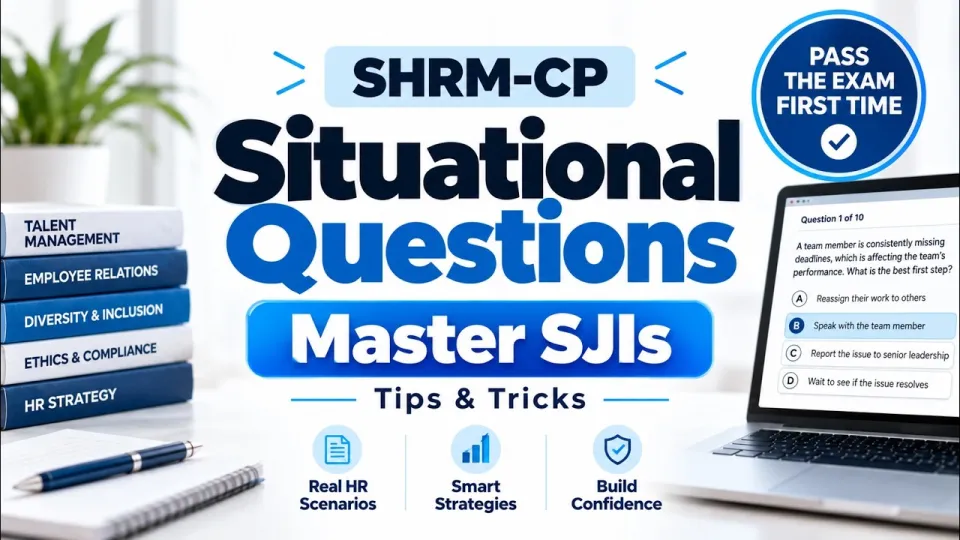
Video: SHRM CP Situational Questions (SJIs) | TIPS TO PICK THE RIGHT ANSWER
· based on the channel PrepSolution
Key takeaways
- SHRM CP situational questions test judgment in HR scenarios.
- Five decision checks guide answer selection: facts, policy, escalation, HR role, people involved.
- Recognize five common traps: premature action, passive response, taking over, unnecessary escalation, legal errors.
- Distinguish between first step and best overall solution in answers.
- Practice with realistic scenarios to improve answer accuracy.
SHRM CP situational questions, also known as situational judgment items (SJIs), challenge candidates to choose the most effective response to complex HR scenarios. To answer these questions effectively, it’s essential to understand how to evaluate multiple plausible options and select the best one based on HR principles and legal considerations. For practical preparation, PrepSolution offers free SHRM-CP practice questions that simulate real exam conditions.
Understanding SHRM CP Situational Questions
Situational questions in the SHRM CP exam present workplace dilemmas requiring judgment calls rather than factual recall. These questions often have four answer choices that appear reasonable, making it challenging to pick the right one. The key is to identify whether the question asks for the immediate next step or the most effective long-term solution.
Five Decision Checks to Evaluate Answer Choices
When analyzing situational judgment questions, apply the following five decision checks consistently:
- Facts: Verify that the answer aligns with the information given without making unsupported assumptions.
- Policy and Law: Ensure the response complies with relevant organizational policies and employment laws.
- Appropriate Escalation: Determine if the situation requires involving supervisors or other parties, but avoid unnecessary escalation.
- HR’s Role: Confirm that the action fits HR’s responsibilities without overstepping managerial duties.
- People Involved: Consider who should be involved in the decision or resolution process based on the scenario.
Recognizing Common Answer Traps
Many situational questions include distractors designed to test your understanding of HR best practices. Watch out for these five common traps:
- Premature Action: Jumping to disciplinary or corrective measures without gathering all facts.
- Passive Responses: Avoiding action when intervention is necessary.
- Taking Over Responsibilities: HR should support, not replace, managers’ decision-making.
- Unnecessary Escalation: Escalating issues beyond their appropriate level can complicate resolution.
- Legally Defective Options: Selecting answers that could lead to violations of employment laws or policies.
Practical Tips for Eliminating Wrong Answers
To narrow down answer choices, test each option against the scenario’s facts and wording rather than relying solely on your own workplace experience. Ask yourself:
- Does this option respect company policies and legal guidelines?
- Is this the next logical step or the most effective long-term solution?
- Does this choice involve the right people without bypassing necessary channels?
- Is the action proportionate to the situation described?
By systematically applying these criteria, you can confidently eliminate less suitable answers.
Applying These Strategies to a Workplace Scenario
Consider a scenario where a supervisor requests HR to discipline an employee after a shouting match. Instead of immediately recommending discipline, the best answer might involve gathering facts, interviewing involved parties, and advising the supervisor on appropriate steps. Answers that jump to punishment, avoid involvement, or escalate unnecessarily are typically traps.
Helpful Links for SHRM CP Preparation
- Free SHRM-CP practice questions and registration: https://prepsolution.com/free-practice/shrm-cp?utm_source=youtube&utm_medium=video&utm_campaign=shrmcp_longform&utm_content=cp_long_v09
- SHRM-CP Complete Pass System by PrepSolution: https://prepsolution.com/exam/shrm-cp?utm_source=youtube&utm_medium=video&utm_campaign=shrmcp_longform&utm_content=cp_long_v09
Итог
Mastering SHRM CP situational questions requires a structured approach to evaluating each answer option using decision checks and awareness of common traps. Understanding when to act immediately versus when to plan a comprehensive solution is crucial. The PrepSolution channel provides detailed explanations and practice materials that sharpen your ability to choose the right answer in HR scenarios. For targeted practice and exam readiness, visit PrepSolution’s free resources linked above and apply these tips diligently.
Questions & answers
What are SHRM CP situational questions?
SHRM CP situational questions are exam items that present workplace scenarios requiring candidates to select the best response based on HR knowledge, policies, and legal considerations.
How can I distinguish between the first step and the best overall solution in SHRM CP questions?
Pay close attention to the question wording to identify if it asks for the immediate next action or the most effective comprehensive solution. This guides the choice between a preliminary step and a final resolution.
What are some common traps in SHRM CP situational judgment questions?
Five common traps include premature action, passive responses, taking over managerial responsibilities, unnecessary escalation, and choosing legally defective options that violate policies or laws.
Where can I find reliable practice questions for SHRM CP situational judgment items?
PrepSolution offers free SHRM CP practice questions and a complete exam preparation system at https://prepsolution.com/free-practice/shrm-cp?utm_source=youtube&utm_medium=video&utm_campaign=shrmcp_longform&utm_content=cp_long_v09 to help candidates prepare effectively.
Source: SHRM CP Situational Questions (SJIs) | TIPS TO PICK THE RIGHT ANSWER · Markdown version